
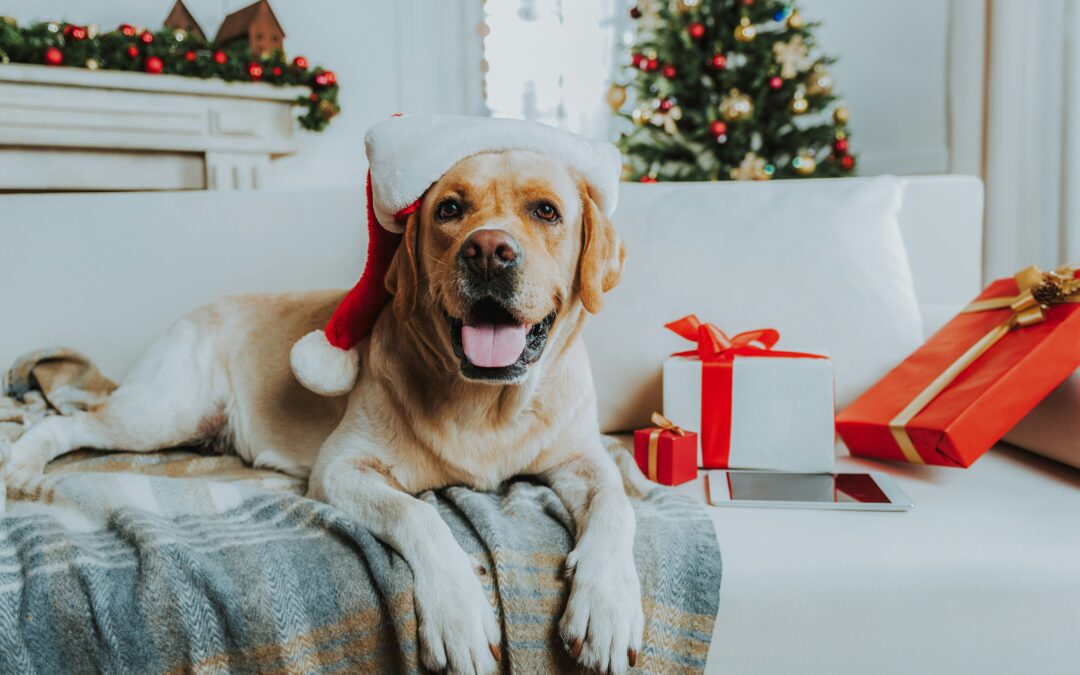
The holidays are a joyful time filled with decorations, delicious food, and festive gatherings, but they can also bring hidden dangers for our furry family members. From tempting treats to twinkling lights, it’s important to keep your pets safe so everyone can enjoy a merry and bright season.
Here are some of the most common holiday hazards and how to keep your pets out of trouble:
1. Dangerous Foods
The holiday table is full of irresistible smells, but many seasonal foods can be harmful, or even toxic, to pets.
Foods to keep away from pets:
- Chocolate – Contains theobromine, which is toxic to dogs and cats.
- Grapes and raisins – Even small amounts can cause kidney failure in dogs.
- Onions, garlic, and chives – Can lead to gastrointestinal upset and damage to red blood cells.
- Bones – Cooked bones can splinter and cause choking or intestinal blockages.
- Alcohol & caffeinated drinks – Even small sips can be dangerous.
- Xylitol (often found in sugar-free gum, candies, or baked goods) – Can cause a rapid drop in blood sugar and liver failure.
👉 Tip: Remind guests not to feed table scraps, and keep trash bins securely closed.
2. Holiday Decorations
Decorations make the season magical, but curious paws and wagging tails can turn them into hazards.
- Christmas trees: Secure your tree to prevent it from tipping over. Keep breakable ornaments on higher branches and avoid tinsel, which can cause serious intestinal problems if swallowed.
- Lights and cords: Pets may chew on wires, risking electric shock. Use cord covers and unplug lights when unsupervised.
- Candles: Keep lit candles out of reach to avoid burns or accidental fires. Consider battery-operated alternatives for a safer glow.
👉 Tip: Always supervise pets around holiday décor, especially new additions they haven’t encountered before.
3. Toxic Holiday Plants
Some traditional holiday plants look beautiful—but they can be harmful to pets if ingested.
- Poinsettias: Can cause mild mouth and stomach irritation.
- Mistletoe and holly: Can lead to vomiting, diarrhea, and more severe reactions depending on the amount consumed.
- Lilies: Extremely toxic to cats—even a small nibble can lead to kidney failure.
👉 Tip: Choose pet-safe alternatives or place these plants well out of reach.
4. Hosting and Travel Stress
The hustle and bustle of the holidays can overwhelm some pets. Visitors, loud noises, and changes in routine may lead to anxiety or escape attempts.
- Create a safe space: Set up a quiet room with your pet’s bed, toys, and water where they can retreat when things get busy.
- Watch the doors: With guests coming and going, pets can slip out unnoticed. Consider baby gates or signs to remind visitors to close doors securely.
- Stick to routines: Try to keep feeding, walks, and playtime on schedule to give your pet a sense of stability.
👉 Traveling? Make sure your pet’s microchip information and tags are up to date before hitting the road.
5. Emergency Preparedness
Despite our best efforts, accidents can happen. If you suspect your pet has eaten something toxic or is showing unusual symptoms, call us right away at 720-851-0820. It is also good to know the location and hours of your nearest emergency veterinary facility.
A Safe & Joyful Season
With a few simple precautions, you can keep the holidays festive and safe for the whole family—furry members included. A little planning goes a long way toward preventing emergencies and ensuring your pet enjoys the season too.
Wishing you and your pets a warm, safe, and happy holiday season! 🎅🐶🐱