
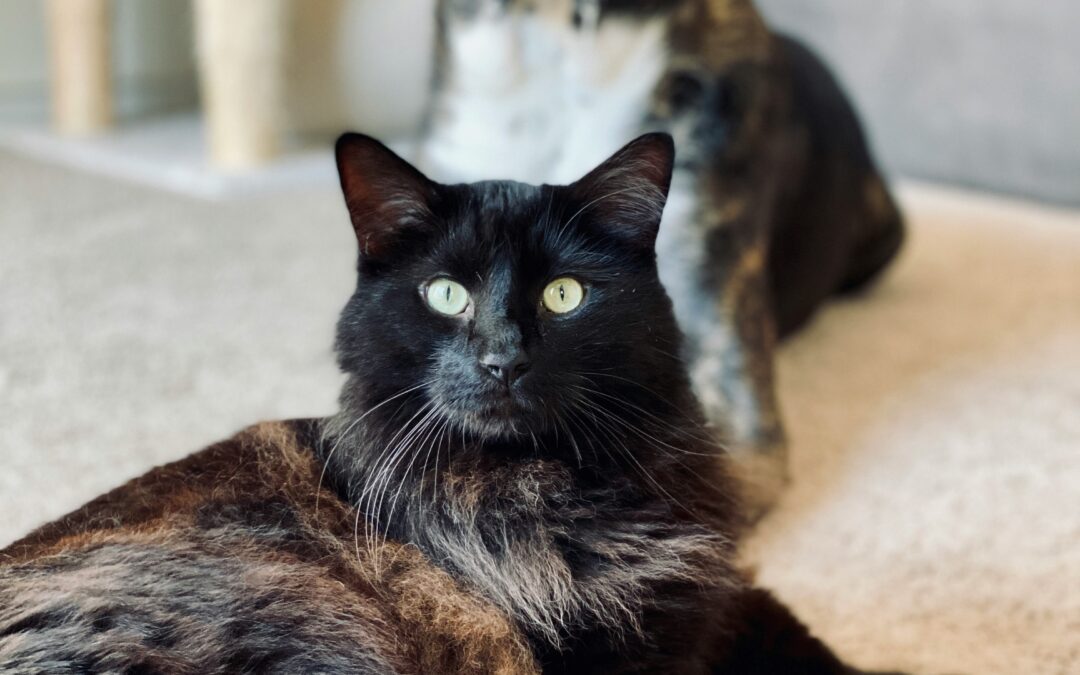
Pets are wonderfully weird.
Dogs eat grass, circle before lying down, tilt their heads when we talk, and follow us from room to room. Cats knead blankets, knock things off counters, squeeze themselves into tiny boxes, and occasionally race through the house like they’ve been struck by lightning.
But have you ever stopped to wonder why?
This October, we’re Mad About Our Pets and putting some of their strangest behaviors under the microscope. 🧪 Many of the quirky things our pets do actually have fascinating explanations rooted in instinct, biology, communication, and the way they experience the world around them.
Grab your goggles and join us in the lab as we investigate some of our favorite curious creature mysteries!
🧪 CASE #001: Why Does My Dog Eat Grass?
Observation: Dog has access to perfectly good food. Dog chooses lawn.
Hypothesis: Identity crisis. Subject believes they are a cow. 🐄
What Science Says:
Grass eating is actually very common in dogs, and it doesn’t necessarily mean something is wrong. Some dogs may simply enjoy the taste or texture, while others may eat grass out of boredom or as part of normal exploratory behavior.
Despite the common belief that dogs eat grass specifically to make themselves vomit, many dogs eat grass without getting sick afterward.
Occasional grass eating usually isn’t a cause for concern. However, frequent or excessive grass eating—especially when accompanied by vomiting, diarrhea, decreased appetite, or other changes—is worth discussing with your veterinarian.
🔬 Finding: Sometimes grass is just…grass.
🧪 CASE #002: Why Does My Cat Knead?
Observation: Subject repeatedly presses paws into blanket, bed, human, or other soft surface.
Hypothesis: Cat is secretly training for a career as a baker. 🍞
What Science Says:
Kneading begins during kittenhood, when kittens press their paws against their mother while nursing. Many cats carry this comforting behavior into adulthood.
Adult cats may knead when they’re relaxed, content, or preparing a comfortable place to rest. Cats also have scent glands in their paws, so kneading may help leave their scent behind.
🔬 Finding: Your cat probably isn’t making biscuits—but they may be telling you they feel pretty comfortable.
🧪 CASE #003: Why Does My Dog Tilt Their Head?
Observation: Human speaks. Subject rotates head approximately 30 degrees. Human immediately says, “Awww.”
Hypothesis: Subject understands every word and is questioning your life choices.
What Science Says:
There isn’t one definitive explanation for the classic canine head tilt. Dogs may tilt their heads while concentrating on a sound, trying to determine where it’s coming from, or processing something they’ve heard.
Some researchers have also explored whether head tilting may be associated with attention and recognition of familiar words.
🔬 Finding: They may not understand the entire conversation, but they’re definitely paying attention.
🧪 CASE #004: Why Does My Cat Get the Zoomies?
Observation: Subject appears peaceful. Without warning, subject launches across the house at maximum velocity.
Hypothesis: Ghost detected. 👻
What Science Says:
Cats are naturally wired for short bursts of intense activity. Their wild ancestors relied on quick bursts of speed to hunt prey, and our indoor cats still carry many of those instincts.
Zoomies may be a way to release stored energy, especially after long periods of resting. Cats are also naturally more active around dawn and dusk, which may explain some of those inconvenient late-night racetrack sessions.
Regular play and opportunities to climb, chase, stalk, and pounce can give those natural instincts a healthy outlet.
🔬 Finding: Probably not ghosts… Probably.
🧪 CASE #005: Why Does My Dog Follow Me Everywhere?
Observation: Human enters kitchen. Subject follows. Human enters bathroom. Subject follows. Human moves three feet to the left. Subject follows.
Hypothesis: Personal security detail has been assigned.
What Science Says:
Dogs are social animals and often form strong attachments to the people they live with. Following you may simply mean your dog enjoys being near you—or has learned that staying close sometimes leads to food, walks, attention, or other good things.
Some dogs are naturally more inclined to stick close to their people than others.
Following becomes more concerning when a dog appears unable to relax without a particular person nearby or shows signs of distress when left alone.
🔬 Finding: You may never go to the bathroom alone again.
🧪 CASE #006: Why Does My Pet Sigh?
Observation: Subject dramatically exhales while lying on a perfectly comfortable bed.
Hypothesis: Life is exhausting when you have no job, and someone else pays the bills.
What Science Says:
A sigh can mean different things depending on your pet’s body language and the situation.
A relaxed pet who sighs while settling down may simply be comfortable or content. In other situations, a sigh may accompany frustration or disappointment—like when that piece of chicken doesn’t make it off your plate.
Context matters. A single behavior rarely tells the whole story, so look at your pet’s posture, facial expression, activity, and surroundings.
🔬 Finding: Sometimes even pets need a dramatic exhale.
🧪 CASE #007: Why Does My Pet Sniff EVERYTHING?
Observation: Five-minute walk has now taken 27 minutes.
Hypothesis: Subject is conducting a neighborhood investigation.
What Science Says:
For dogs especially, sniffing is one of the primary ways they gather information about the world. A scent can reveal an incredible amount about other animals and what has happened in an area.
Allowing dogs opportunities to stop and sniff isn’t necessarily wasted walking time—it provides valuable mental enrichment.
Cats rely heavily on scent, too. Smell plays an important role in how they identify familiar people, animals, objects, and territory.
🔬 Finding: Your pet may actually be conducting an investigation. Let them gather the evidence.
🧪 CASE #008: Why Does My Cat Knock Things Over?
Observation: Object is placed safely on the counter. Cat sees object. Object is no longer on counter.
Hypothesis: Gravity experiment.
What Science Says:
Cats explore their environment with their paws, and batting at objects can mimic some of the movements involved in hunting and play. Sometimes they’re investigating what an object is or how it moves.
And sometimes? They’ve learned that knocking your water bottle onto the floor gets a pretty immediate reaction from you.
Providing interactive toys, puzzle feeders, climbing opportunities, and regular play can give curious cats more appropriate ways to investigate their surroundings.
🔬 Finding: Gravity remains operational. Your cat will continue testing.
🧪 CASE #009: Why Does My Dog Circle Before Lying Down?
Observation: Subject turns once. Twice. Three times. Finally lies down.
Hypothesis: Bed requires precise calibration.
What Science Says:
Circling before lying down may be an instinctive behavior passed down from dogs’ ancestors. Turning around could have helped flatten grass or other vegetation, check the surroundings, and create a comfortable resting spot.
For most dogs, a few circles before settling down are perfectly normal.
However, repeated circling, difficulty getting comfortable, or frequently getting up and lying back down can sometimes indicate discomfort or mobility concerns, particularly in older pets.
🔬 Finding: A few circles may be instinct. Twenty circles deserve a closer look.
🔬 CASE #010: When Is “Weird” Behavior More Than Just Weird?
Our pets do plenty of strange things—and most of the time, those quirks are simply part of what makes them them.
But sometimes a change in behavior is one of the first clues that something isn’t quite right.
Pay attention when you notice a new, sudden, or significant change in your pet, including:
🐾 Hiding or withdrawing more than usual
🐾 Increased vocalization
🐾 New aggression, irritability, or anxiety
🐾 Changes in appetite or thirst
🐾 Changes in sleep patterns
🐾 House-soiling or litter box changes
🐾 Reluctance to jump, climb, walk, or play
🐾 Repetitive behaviors or confusion
🐾 Suddenly becoming unusually clingy or distant
Pets can’t tell us when they’re experiencing pain, illness, anxiety, or cognitive changes, so behavior can sometimes be an important piece of the puzzle.
🔬 Finding: You know your pet’s “normal” better than anyone. When their normal changes, it’s worth paying attention.
🧪 The Experiment Continues…
The more we understand about our pets, the more fascinating they become. From midnight zoomies and head tilts to grass eating and dramatic sighs, many of their strangest behaviors offer a glimpse into their instincts, senses, communication, and biology.
And there are still plenty of mysteries left to investigate!
This October, pay attention to your own curious creature and ask yourself: What does my pet do that makes me wonder, “WHY do you do that?”
And remember: not every mystery is harmless. If you notice a sudden or significant change in your pet’s behavior, appetite, activity, or personality, give our VCPI Pack a call. Sometimes a change in behavior is your pet’s way of telling you something is wrong.
Because when it comes to our pets, we’re always curious—and always Mad About Our Pets. 🧪⚡🐾